Why is so much importance attached to human rights in both national and international law? In particular, why is it fundamental to safeguard human rights in times of emergency, such as terrorism?
“The only thing necessary for the persistence of evil
is for enough good people to do nothing.”
– this Amnesty quote highlights the significance of fundamental law and order for protecting life in the face of adversity, or for protecting the basic thread that ties societies – our ‘human rights’.
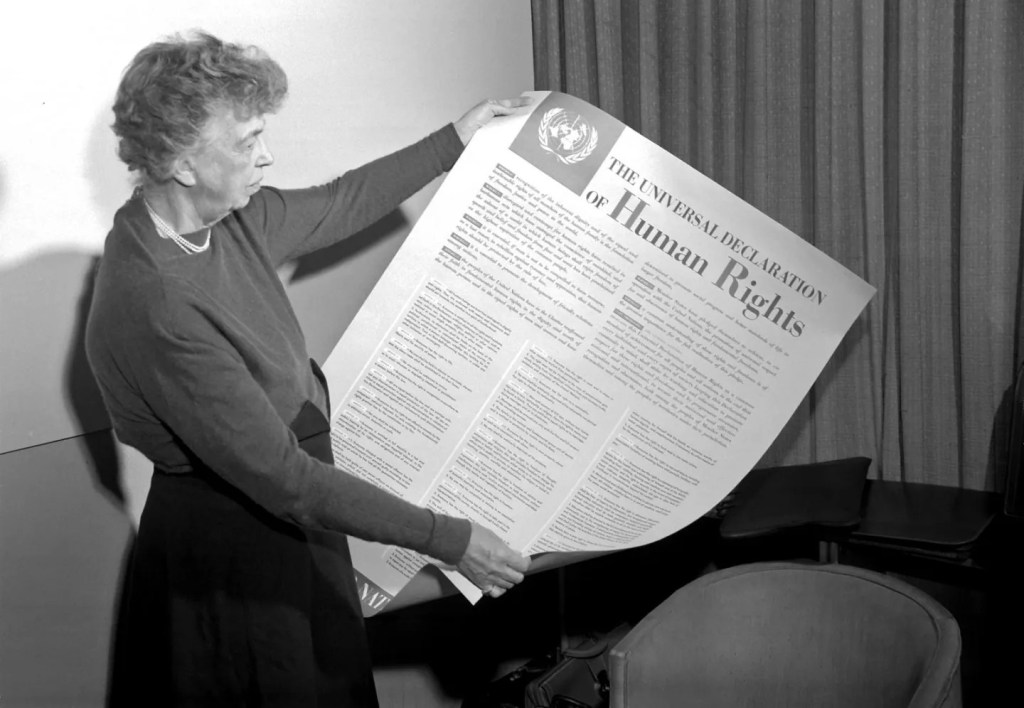
The barbarism of Second World War had left everyone questioning the need for protection of an individual’s right to life and it was with this understanding that the Universal Declaration of Human Rights was passed in 1948.
This declaration, which was the first structured effort at an international level, aimed at promoting the basic political, civil, economic and social rights that an individual is entitled to irrespective of his nationality, ethnicity or sex. The necessity of human rights was manifested in the preamble of the UN Declaration of Human Rights stating, “Recognition of the inherent dignity and of the equal and inalienable rights of all members of the human family is the foundation of freedom, justice and peace in the world.” (Universal Declaration of Human Rights, 1948).
Human Rights : Theories
The act of simply existing should make the existence of human rights obvious. However, several theories have been put forward to substantiate the importance of human rights and how they became an integral part of social expectations. First, is the ‘biological theory’ based on empathy and altruism which supports human rights in order to bring individuals at the same platform as against the comparative reproductive advantage that some of them may have. Second, is the ‘natural law theory’, based on the natural moral behavior derived from a common understanding of justice as per the religious precepts. The third, lesser known one is the ‘interest theory’, which considers respecting an individuals rights as a duty in order to ensure that ones own rights will be safeguarded too. (Finnis, 1980). And lastly, the ‘ sociological theory’ states that the individual accepts rules as ‘human rights’ which codify moral behavior from a lawful body in exchange of a security advantage.
On a broader scale, Human Rights takes importance as a philosophy than just a legal concept.
Initially, some people felt that Human Rights abuses were mostly common only in dictatorships, such as abuse of freedom of speech, and freedom of press. However, similar violations also existed in a democracy, such as in the case of the Guantanamo Bay. Therefore, an urgent requirement was felt for defining the Human Rights in a structured manner and as a mechanism which led to the formulation of the ‘International Human Rights Law’ as a branch of International Law. Within this, the constitution of ‘International Human Rights Instruments’ aimed to discuss Human Rights issues with the help of global instruments – applicable to any state in the world, and regional instruments – applicable to a state of a specific region (UNHCHR, 1948).
However, the implementation of these laws and order necessitated establishments of mechanisms which were sometimes relatively less powerful, as in the case of the UN Treaty Committees; and sometimes assumed great importance such as the European Court of Human Rights – where individuals could directly take their private cases to court. Over the past few years, the International Law has transformed from a body of law and order, to recognizing the importance of individuals rights within the International legal framework.
Positive and Negative Human Rights
The difference between positive rights like economic, social and cultural rights, and negative rights like civil and political rights, assumed greater significance in their application to different states. This led to the preparation of two treaties under the International Bill of Rights known as the ‘International Convention of Civil and Political Rights’ (ICCPR) and the ‘International Convention of Economic, Social and Cultural Rights’ in the year 1966 and 1976 respectively (UNHCHR, 1948). These laws hold importance in the context that every individual has the right to determine their own political status and pursue their economic, social and cultural development without any restraint – thereby ensuring that every person has a right to self- determination.
Later, a well-regulated body called the ‘Human Rights Committee’ was started with the aim of submitting reports about practices conducted in violation of Human Rights, a situation which takes front seat especially during the subsistence of terrorism. In order to protect and promote the Human Rights in a given country, about 90 National Human Rights Institutions were set up and under the leadership of UN High Commissioner of Human Rights, a number of bodies were started to look into matters relating to protection and monitoring of Human Rights (NHRI, 1948).
The world constitutes of varying cultures and social practices and hence different regions are marked by a distinct way of life. It is this disparity in cultures and beliefs which made it obligatory for certain regional organizations to make specifically designed laws binding to their regions for protection of Human Rights. Some of these include the European Court of Human Rights, African Commission on Human and Peoples’ Rights, Cairo Declaration on Human Rights in Islam, Iran’s Defenders of Human Rights Center etc.
Human Rights hold utmost importance during a state of emergency as it is during this period that the normal behavior of the citizens of a particular state is altered thereby leading to suspension of some Human Rights. States that are signatories to the ICCPR are allowed to derogate themselves from certain Human Rights in ‘time of public emergency’. (OHCHR, 1976), and this detraction must be announced to the secretary General of UN by the State. On the other hand there are few Human Rights which are non-derogable even during cases of emergency – such as the ‘right to life’, ‘right to be free from torture’, ‘right to be free from slavery’ and ‘right to be free from retroactive applications of penal laws’. A negative aspect of this it was noticed by the Office of the High Commissioner for Human Rights (OHCHR) where, in the name of fighting terrorism, several countries adopted certain practices which gave them the freedom to enjoy virtually all Human Rights (OHCHR, 2001).
Emergency Dilemmas
There are two basic dilemmas faced while protecting Human Rights during a state of emergency. First lies in clearly defining all the situations that will be constituted as an ‘emergency’. The fact that a state of emergency will also bring about a certain amount of freedom in using human rights can lead to complex difficulties. For example, in the year 1986, about 70 states were undergoing some kind of an emergency in order to enjoy various Human Rights (ILA, 1986). The second problem is that of differentiating emergency situations that do lead to Human Rights abuse from those which don’t. This means that not all emergency situations are of the same degree and hence the freedom of enjoying human rights has also to be given considerably (Fitzpatrick Joan M, 1994).
Following the attack on September 11, 2001 on USA, the issue of Human Rights protection and terrorism has been inextricably linked with each other. In the wake of an emergency, such as terrorism, the basic right to life has to be protected first. This is because terrorism is aimed either at taking away innocent lives or filling the minds of thousands with fear. In cognizance of this, the Security Council created the Counter-terrorism Committee (CTC) in order to make it obligatory for states to enforce more forceful counter-terrorism measures at a national level so as to cooperate in their struggle against terrorism (UN Charter Resolution 1373, 2001). In response to this, Kofi Annan, the Secretary General of the UN at a CTC meeting said that, “Our responses to terrorism, as well as our efforts to thwart it and prevent it, should uphold the human rights that terrorists aim to destroy. Respect for human rights, fundamental freedoms and the rule of law are essential tools in the effort to combat terrorism – not privileges to be sacrificed at a time of tension.” (CTC, 2003). This powerful speech highlights the point that human rights will never be destroyed by acts of terrorism, and in fact be used as a shield against terrorism.
Citizen First or Nation?
Terrorism is the worst enemy of human rights and the biggest threat to a civilized society. It tramples under its feet all that is human – culture, values, civilization and existence. David Fromkin once said, “Terrorism wins only if you respond to it in the way that the terrorists want you to: which means that its fate is in your hands and not in theirs.”
In emergency situations as that of terrorism, states have to find a balancing approach between protection of Human Rights and national security. Therefore, certain human rights are often inevitably suspended during such times. This poses two challenges. First, is the inherent conflict between human rights and national security, in which case the scale usually falls in favor of the latter. While introducing the ATCS Bill to the Parliament, David Blunkett, justified it, “If there were no emergency, if there had not been a terrorist attack and if there were no danger that not passing the Bill by the end of the year would put us at risk, I would not be introducing it in the first place.” This can create a certain bitterness amongst the citizens.
The second challenge is posed by short-term versus long-term security objectives. Since terrorism is not only a series of attacks but an on-going conflict, the security objectives have a long-term goal. As highlighted in a speech by Mr.Blunkett, “We are proposing measures allowing us to take rational, reasonable threats and proportionate steps to deal with an internal threat and an external, organized terrorist group that could threaten at any time not just our population, but the populations of other friendly countries.” (NLS, 2004). So while efforts are being made of combating terrorism forever, certain human rights if not completely suspended, might be lessened in their degree of effectiveness.
Another significant example is the case of Nepal, which drew considerable global attention when it declared a state of emergency over a long course of time. There had been massive human rights abuses in the form of daily violence and terror meted out on ordinary communities, and Nepal had been in the clutches of a human rights crisis for many years. Rather than safeguarding the national security, the ‘state of emergency’ declaration only encouraged the corrupt culture of non-accountability and lack of transparency, thereby plummeting the chances of peace. During this period a large number of basic human rights were also suspended, such as the Right to Information, Right to Privacy, Right to a Constitutional Remedy, Freedom of Assembly, Freedom to form unions and associations, Freedom of opinion and expression, Press and publication rights and Right against Preventive Detention.
5 D’s – A Terrorist’s Enemy
On a brighter side, Kofi Annan recently mentioned the 5 D’s – as the basic pillars of a ‘principled, comprehensive strategy’ to fight terrorism globally. The first D aims at ‘dissuading disaffected groups from choosing terrorism as a tactic’ – to convey with the help of political and moral authorities, that terrorism under any circumstances is unacceptable. The second D is to ‘deny terrorists the means to carry out their attacks’ – through efficient action against money-laundering. The third D is to ‘deter States from supporting terrorists’ – under which the Security Council resolves to take action against any state which gives any kind of support to terrorism. The fourth D aims to ‘develop state capacity to prevent terrorism’ – by bringing the relatively weaker states to equal levels as others in order to help them build capacity to fight terrorism. And the last D, to ‘defend human rights in the struggle against terrorism’ – which ensures that the basic human rights are not abused in the process of combating terrorism (CTC, 2005).
In an increasingly polarized world, the protection of Human Rights only assumes greater significance.
“All human beings, whatever their cultural or historical background, suffer when they are intimidated, imprisoned or tortured . We must, therefore, insist on a global consensus, not only on the need to respect human rights worldwide, but also on the definition of these rights, for it is the inherent nature of all human beings to yearn for freedom, equality and dignity, and they have an equal right to achieve that.“
– 14th Dalai Lama


Leave a Reply