Afroman, in his Grammy nominated song, admits to a few things gone wrong ‘because he got high’. Known to affect an individual’s productivity by making one lazy and inefficient, a shrewd capitalist would view Marijuana as an obstacle in his pursuit of ‘profit maximization’. For him, contrabanding Marijuana is not a ploy but the only answer.
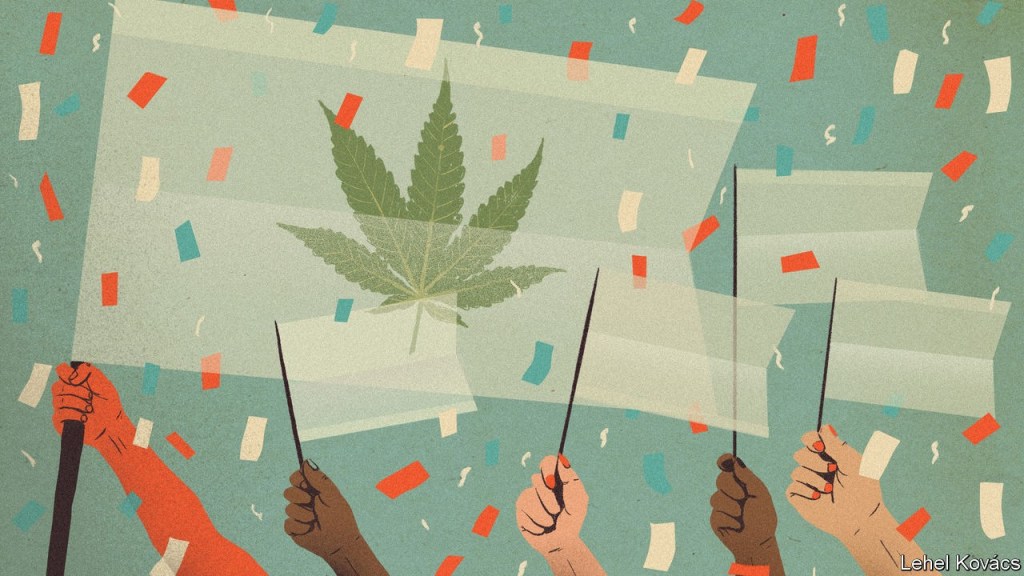
But enough evidence has confirmed that the harmful effects of alcohol and tobacco are greater than that of Marijuana (a racialist term used to avoid associating it with the friendly cannabis plant). Probably with this understanding the USA had tried to ban alcohol in the 1920s, but with totally disastrous consequences. Point is, markets will provide anything even if it is illegal. So, if tobacco is the most addictive drug, and alcohol kills more people, why ban only Marijuana?
The Forbidden Fruit
In 2003, the global drug trade generated an estimated $321.6 billion, which amounts to slightly less than 1% of total global commerce. The illegal activities necessary to carry out this commerce has led to ‘creation’ of criminals, who have ties with organized crime, and are getting wealthier by the day. Moreover, huge costs and resources are involved in the law enforcement of Drug Prohibition – which involves catching those who buy or sell in the black market, prosecuting them, and housing them in jail. The number of drug offenders imprisoned in the U.S. has increased 800% since 1980, mostly poor people of color. By banning Marijuana, decisions about price, age restrictions, place of sale, and quality of product – have all been placed at a criminal’s disposition. By far the largest source of funding for terrorists around the world comes from the sale of illicit drugs. For this reason, Drug Prohibition has come to known of as the ‘Golden Goose of Terrorism’.
Economist Milton Friedman estimated that more than 10,000 deaths a year in the USA are caused by the criminalization of drugs. Many agree with Friedman’s point of view that most of the harms that come from drugs, especially Marijuana, are because they are illegal.
This is funny bit – Charles Manson was transferred from Corcoran State Prison because he was found to have been selling illicit drugs from his prison cell, while he was in solitary confinement!
If we can’t keep drugs out of prisons, how do we plan to keep them off the streets?
Clearly, any other policy except for the one we have in place would be better.
Drug Is Not A Four-Letter Word
“We have succeeded in making pot boring” – quipped the Minister of Health of Holland in a news conference talking about their achievements in legalizing drugs.
5 years after Portugal decriminalized drugs, the number of new HIV cases caused by using dirty needles to inject illegal substances fell from nearly 1,400 in 2000 to about 400 in 2006. Statistics point out that judging by almost every metric, decriminalization of drugs has been a resounding success in Portugal and Holland.
If a system of strictly regulated distribution of these drugs was made available, starting with marijuana, it would benefit in more than one way. First, by imposing taxes on the sale of these drugs, the government could generate revenues that could be used for providing better treatment for drug addicts. In the US, if marijuana were taxed similarly to alcohol or tobacco, it might generate as much as $6.2 billion annually, notwithstanding the positive revenue flow created by the entrepreneurs. Second, a legal cannabis industry could create millions of jobs in every field from the farms to the café.
Though the short-term demand for marijuana would augment after legalization, it doesn’t mean that same would be the case for the long-term demand, as some may switch from a more harmful drug to marijuana. And if legalized, the government has total control over the consumption of marijuana by increasing or decreasing the taxes on the product.
The problem is not the Drug, but the ‘Drug Addicts’. So from a society’s point of view, since drug addicted people would no longer be automatic criminals, they wouldn’t fear the government and be more open to treatment, as is the case with Portugal. For proponents of the ‘gateway effect’, one must understand that a huge role is played by the people selling cannabis, with an incentive to lead their customers to more addictive and expensive drugs. Legalizing drugs does away with these very criminals – the middlemen.
But before one thinks about legalizing marijuana, a close look at the Dutch experience would tell us about a key problem in doing so. After the Dutch liberalized the use of cannabis, its prevalence amongst the age group of 18-20 increased from 15% in 1984 to 44% in 1996. Moreover, in spite of the government’s policy to provide ‘medical’ marijuana to patients through pharmacies, many chose to obtain their marijuana through cafes. Today, over 73% of Dutch towns do not allow cannabis cafes.
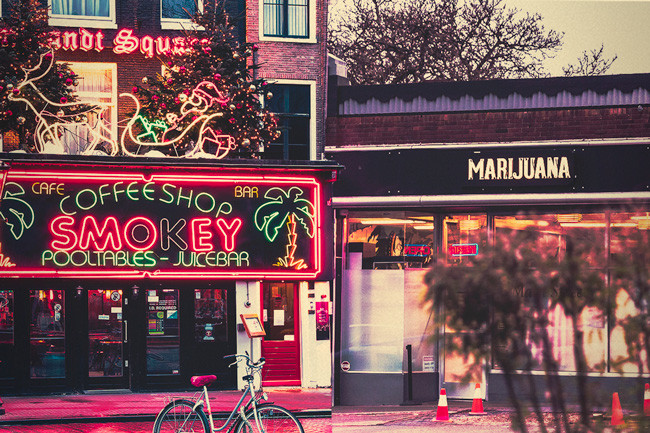
However, the drug problems that engulf the Dutch society are no more than the ones that bother modern democracies with harsher drug laws. In the case of Holland the crucial problem is that of ‘Drug Tourism’, which accounts for one-third of the people who use and abuse drugs in their country.
Fact is, no country can operate a liberal drug policy by itself, alone. It requires the co-operation of its neighbors – and that’s the tough part.
Trade is a four letter word
“Rarely has one nation so successfully promoted its own failed policies to the rest of the world.”
– Ethan Nadelmann, Foreign Policy
The USA locks up more people each year for drug violations (roughly 500,000) than Europe locks up for all crimes. It has 5% of the world’s population and 25% of the world’s prison population, and drug-use rates worse than all those lax European states. So has the US won its ‘War on Drugs’?
The early advocates for a ban on cannabis emphasized more on it being a dangerous and addictive ‘narcotic’. But soon the petrochemical and pharmaceutical companies realized the threat posed by cannabis, which was being grown for fibre. While huge pharmas were patenting new drugs, petrochemical companies were getting ready to monopolise the fuel supplies and take control of the paper industry. Tycoons such as William Hearst, DuPont, and Anslinger, wanted to outlaw cannabis hemp and convince people that smoking ‘marijuana’ was likely to cause ‘reefer madness’. In 1928, Britain formed the Dangerous Drugs Act, which banned cannabis along with heroin, opium and cocaine, except for medicinal use, and in 1937, cannabis was criminalized in the US.
The ban still continues because some giants continue to gain heavy from it. Pharmas will profit less if sick people are able to grow their medicine in their backyard. Chemical companies would suffer as cotton requires large amounts of chemical fertiliser and pesticides, unlike cannabis which produces stronger and more durable fibres. Plastics industry might as well be out of business as many plastic products could be made from natural cannabis without pollution. Timber industry would be hampered, as cannabis ‘hurds’ is a better replacement to make furniture as well as a higher quality paper. The tobacco and alcohol industries would undergo a huge loss if people turned to cannabis for recreational purposes. All the employees who benefit from the current Drug Prohibition, that is the criminal justice industry and supportive industries, would be out of jobs. Most importantly, it would be a setback for the fuel companies including fossil, nuclear and solar. According to a new revelation, cannabis-derived fuel, which is capable of providing almost all of our domestic and industrial energy requirements, is not only a cheaper but also a safer form of viable energy. Here, the capitalists are the giant corporates.
Another important aspect is what legalization of drugs would do to Latin America, where recent election results have confirmed the prevalence of the ‘Pink Tide’ – an anti-US trend. And what about Afghanistan, with the largest opium production in the world, where the US has installed a puppet government? In the light of this, one might see how legalizing drugs would affect the US drug trade adversely. Here, the capitalist is the world’s superpower.
So is contrabanding Marijuana a capitalist ploy? Yes, a greedy capitalist’s great ploy.
But what a true, self-respecting capitalist would really want is for all drugs to be legal, regulated, and taxed.


Leave a Reply