The following article is a Gist – an experimental writing format that briefly captures the essence of another long-form article, The Flexible Work Fallacy, as originally published on AEON.
A narration of a 40-year long journey of structural work reform – how a feminist vision and tireless campaigning found limited space in the public and private sector labor laws, even further diluted by corporate and political agendas. By citing the struggles of modern workforce despite flexible-work policies, the essay presents a case for revisiting the original ideals about paid-work as first advocated by the second-wave of feminism.
Embodying the 21st century corporate ideals of work-life balance and employee well-being, the availability of flexible-work is considered a quintessential perk by most employees. This freedom to choose a time and place of convenience, however, has blurred the boundaries between professional and personal life. In fact, especially for women, it often aggravates the problems it was meant to solve – of gendered housework and childcare.
Women first felt the need for workplace flexibility during the 1970s, when the socio-economic climate in US and Britain was marked by rising living costs and wage stagnation, necessitating families to have more than one breadwinner. With an increasing number of educated, skilled women, the rate of married women in the workforce had since risen exponentially.
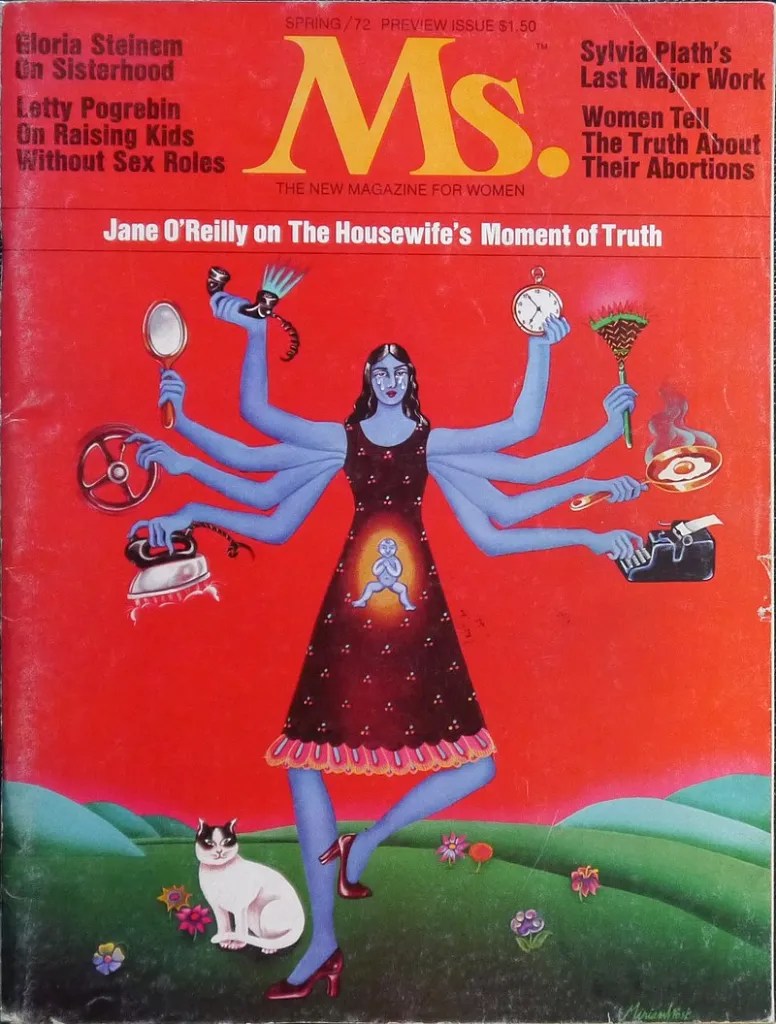
Parallelly, these communities were witnessing the second wave of feminism – which of other things, challenged the renewed domesticity of women post the Second World War. As more women participated in the 9-to-5 jobs, embracing the 40 hour working-week model, a common theme that emerged from their shared experiences was the struggle of ‘the second shift’ – of combining paid work with care work.
Charged by the dawning that ‘personal was political’, feminist campaigns through the 1970s and 1980s advocated for reforming paid-work through arrangements like flexible hours, telecommuting, term-time working, and job sharing. The author learns from notable flexible-work activist Adrienne Boyle about her forming the Job Sharing project, wherein a full-time position was divided between two people, allowing women to work fewer hours without losing benefits or status. The idea to offer part-time employment in a range of professions imagined not only a transformed work culture, but a society where ‘sharing’ and ‘teamwork’ would inspire a more social way of working.
But flexibility alone was not an all-encompassing solution, particularly for those who wanted or needed to work full-time, or were on low wages.
This cognizance led feminist coalitions like the National Child Care (NCC) Campaign to also advocate for workplace nurseries – in groceries, universities, offices and other places. Whether employer-led or through community childcare, the underlying hope was to provide inclusive childcare – anti-racist and anti-sexist in spirit. Nevertheless, the NCC campaign did face some criticism that their vision didn’t account for the unique barriers for Black families.
Notwithstanding the obstacles, feminist movements for labor reforms made some headway in the public sector of US and Britain by 1980s. The London Borough of Camden set the precedent by offering ample parental leaves, an onsite childcare center, and an open-to-all staff job-sharing scheme. These policies, and not time and place flexibility, were at the heart of the feminist vision for structural work reform. Job-sharing policies introduced by many school districts and local councils soon extended to include employees of both sexes. But the success was short-lived; curtains fell on these programs in wake of the ensuing economic stagnation and public sector cuts towards the end of the decade.
“Interviewing managers turned me into a feminist.“
That’s when the private sector stepped in, but their implementation of family-friendly policies was not instinctive, and far removed from the original vision. Academic Margery Povall tells the author about her exhausting and depressing process of convincing policymakers for affirmative action. This experience turned her into a feminist. Her crusade eventually led NatWest to introduce a maternity-leave scheme – one of the earliest such offerings in the UK. But Povall’s other suggestions of flexible hours, parental leave and onsite childcare didn’t gain ground.
Nevertheless, an enduring and intensified engagement with the private sector resulted in a political reconstitution of workplace feminist activism from far-left groups to neutral non-profits. The Job Sharing project integrated with the New Ways to Work organisation and converted into a consulting firm. Exploiting the prevailing business consulting boom provided some financial relief to activists as they continued to walk the tightrope between attracting corporate interests and preserving their own agenda.
If new policies weren’t everything that activists had hoped, the introduction of some kind of flexibility felt like a step in the right direction.
Meanwhile, an imminent demographic shift in Britain was set to cause a decline in the traditional labor market entrants, and consequently create a greater urgency to hire women workers. It was this anxiety, in the backdrop of strenuous feminist campaigning which led big, private sector corporations in US and Britain to open up to flexible-work policies. Progressives grabbed this opportunity to promote workplace reform, but they re-framed their demand for flexible-work with a profit-motive that would benefit both sexes, forgoing their cherished ideals of job sharing and mothers’ needs. Besides depicting an appealing, progressive image, businesses soon realized that some form of flexibility benefited their own economic interests without affecting employee productivity. With some rare exceptions, onsite childcare was largely rejected as too expensive. Instead, companies arranged for childcare information services for parents.
In the past four decades, professional women have greatly benefited from flexibility. However, the private sector’s bias towards retaining women in top management has diminished the chances for low-income women to accrue these benefits in totality. While parental leave is a norm in UK and US today, most other nations provide only maternity-leaves. A set of provisions for low-income workers and stable scheduling for shift workers are some pressing priorities. The COVID-19 pandemic is a testimony to the difficulties and often even undesirability of work-from-home. Women are still wound up with an unequal load of housework and childcare. Bonds of care – a collective responsibility towards our children, the elderly, sick, and other vulnerable members – must be at the heart of our vision when we re-imagine the way forward for work.
Keywords: Feminism, Women, Flexibility, Flexible Work, Work, Workplace Reform, Work-Life Balance, Workplace Well-being, Employee Well-being
AEON is a digital magazine that takes a profound deep dive into ideas around science, philosophy, society and the arts.
Further Engagement:
1) ‘Flexible’ Family Leave Is Lousy Feminism | Gina Schouten| Boston Review
2) Don’t Build Roads, Open Schools | Helen Lewis | The Atlantic
3) Can we all “have it all”? | Anne-Marie Slaughter | TED Talk


Leave a Reply